
Things to Check Before Installing Solar Panels on Your Roof
- 5 days ago
- 6 min read
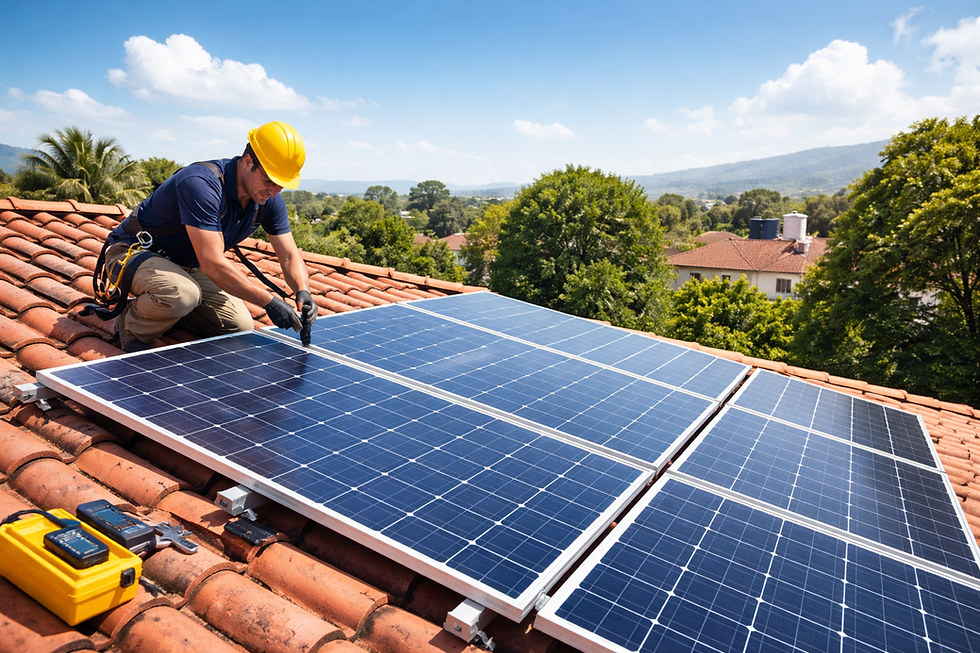
Rooftop solar has quickly moved from being an alternative power source to becoming a practical necessity for many homeowners. Rising electricity tariffs, frequent power demand, and the push toward sustainable living are motivating families to invest in solar energy. But installing solar panels is not the same as buying a household appliance. It is a long-term structural and electrical upgrade to your home that will stay in place for more than two decades.
Because of this long lifespan, preparation plays a crucial role. A well-planned installation delivers excellent savings and smooth performance for years, while a poorly planned one leads to low power output, leakage issues, electrical faults, and delayed returns on investment.
Before placing solar panels on your roof, several technical, financial, and environmental factors must be evaluated. Understanding these checks will help you make a confident decision and ensure your system performs efficiently from the very first day.
Start With Your Electricity Consumption
The most important step in solar planning is understanding how much electricity your household actually uses. Many homeowners choose a system size based on budget or roof space, but solar capacity should primarily match consumption.
Look at your electricity bills from the past 12 months and identify your average monthly usage in units (kWh). Seasonal variations matter as well. During summer, air conditioners and coolers increase demand, while winter usage may be lower.
This data determines the ideal system capacity. A smaller system may reduce only a small portion of your bill, forcing continued dependence on grid power. An oversized system increases upfront cost without proportional financial benefit.
Your goal is balance — a system large enough to cover most daily consumption while keeping the investment reasonable.
Evaluate the Structural Condition of the Roof
Solar panels remain installed for about 25 years. The roof supporting them must be structurally sound for that entire period. If your terrace has cracks, weak beams, or water seepage, these issues should be repaired before installation.
The solar mounting structure adds permanent weight. Although concrete roofs generally handle it easily, old or damaged slabs may weaken over time. Metal sheet roofs need special mounting methods to avoid bending or leakage.
A simple rule helps here: if your roof might need major renovation within the next 5–10 years, complete that work first. Removing and reinstalling panels later increases cost and risk of damage.
Structural inspection ensures the system remains safe during heavy rain, wind, and long-term exposure to sunlight.
Direction of the Roof and Sunlight Exposure
Solar panels produce electricity only when exposed to sunlight. The direction your roof faces determines how much energy it can generate throughout the year.
In India, south-facing roofs receive the highest sunlight exposure. East and west orientations still perform well but generate slightly less power. North-facing surfaces are usually less efficient and may require special mounting adjustments.
Equally important is shadow analysis. Even a small shadow falling on one section of a panel can reduce output significantly. Shadows may come from nearby buildings, trees, overhead tanks, parapet walls, or towers.
Solar professionals usually study the sun’s path across seasons before installation. This ensures panels receive maximum sunlight year-round rather than just during certain months.
Available Terrace Space
The number of panels depends on how much clear space your terrace offers. However, usable space is different from total space. The area must be free from shade and accessible for maintenance.
A typical 1 kW solar system requires roughly 80–100 square feet. Larger systems need proportionally more space. But spacing between panel rows is necessary to prevent panels from shading each other, so extra area is always required.
You should also keep walking space for cleaning and leave access to water tanks or pipelines. Completely covering the terrace may create maintenance difficulties later.
Planning layout carefully helps avoid rearranging panels in the future.
Local Climate Conditions
Weather plays a major role in solar performance and durability. Solar panels generate electricity even on cloudy days, but environmental factors influence efficiency and maintenance frequency.
In hot regions, high temperatures slightly reduce panel output, although modern panels are designed to withstand heat. Dust accumulation is a more common issue, especially in dry areas. Dust layers block sunlight and gradually reduce energy production if cleaning is ignored.
Coastal regions require corrosion-resistant mounting structures because of salty air. High-wind areas demand stronger anchoring to prevent loosening during storms.
Choosing materials suitable for your local climate ensures consistent long-term performance.
Selecting the Right Type of Solar System
Before installation, decide how the system will interact with the electricity grid.
A grid-connected system is the most common option. It supplies power directly to your home and sends extra electricity back to the grid, reducing your bill. This option is cost-effective and suitable for homes with stable power supply.
An off-grid system works independently using batteries and is usually chosen in remote areas without reliable electricity.
A hybrid system combines both, providing backup power during outages while still exporting excess energy.
The right choice depends on whether your priority is bill savings, backup during power cuts, or energy independence.
Government Permissions and Net Metering
Solar installations must comply with local electricity board regulations. One of the most important policies is net metering, which allows unused solar electricity to be exported to the grid.
Without proper approval, your system may generate electricity but provide limited financial benefit. Documentation generally includes technical drawings, safety certifications, and inspection after installation.
Completing the approval process ensures legal operation and accurate billing adjustments.
Choosing Quality Solar Panels
All solar panels may look similar, but their efficiency and lifespan vary greatly. The panel type influences how much electricity you generate in limited space.
Monocrystalline panels offer higher efficiency and perform better in low light, making them ideal for smaller rooftops. Polycrystalline panels are more affordable and suitable when space is not a limitation.
Warranty is a key indicator of quality. Most reliable panels provide a performance warranty of around 25 years, guaranteeing gradual efficiency decline rather than sudden failure.
Since panels remain outdoors permanently, durability is more important than minor cost savings.
Importance of the Inverter
Solar panels generate direct current electricity, which must be converted into alternating current for home usage. This conversion is handled by the inverter, making it one of the most critical components.
An efficient inverter ensures stable voltage and maximum energy utilization. Advanced models also allow monitoring through mobile applications, helping you track daily generation and detect issues early.
Selecting a reliable inverter prevents energy loss and improves overall system efficiency.
Deciding on Battery Backup
Many homeowners assume solar panels automatically supply power during outages. However, grid-connected systems shut down during power cuts for safety reasons.
Battery storage becomes necessary if you want electricity during blackouts. Batteries increase system cost significantly, so they should only be chosen when backup is essential.
Homes with stable power supply often skip batteries and focus purely on reducing electricity bills. In areas with frequent outages, backup storage becomes more valuable.
Installation Quality Matters
Even the best components cannot perform well if installation quality is poor. The mounting structure must be aligned at the correct angle to capture maximum sunlight and firmly anchored to withstand wind.
Waterproof sealing is extremely important. Improper drilling can cause terrace leakage during monsoon, leading to long-term damage. Professional installers use protective coatings and proper sealing methods to prevent this.
A well-executed installation ensures both safety and efficiency for decades.
Maintenance Requirements
Solar systems require minimal maintenance but should not be completely ignored. Dust accumulation is the most common reason for reduced output.
Cleaning panels periodically with water maintains performance. Monitoring generation through an inverter display or app helps detect any drop in output early.
Planning safe terrace access makes maintenance easy and prevents accidental damage.
Financial Planning and Returns
Solar energy is a long-term investment rather than a quick saving tool. The cost depends on system capacity, component quality, and installation complexity.
Most residential solar systems recover their investment within a few years, after which electricity becomes almost free except for minor maintenance.
Understanding payback period helps set realistic expectations and confirms the financial advantage of solar power.
Choosing an Experienced Installer
A solar system must be designed according to your home rather than installed using a generic layout. Each roof has different orientation, space, and consumption requirements.
Working with experienced professionals like Rayconn Power ensures technical assessment, proper design, and reliable after-sales support. Expert installation can significantly increase energy production compared to poorly planned setups.
Safety Measures
Because solar systems operate under high voltage during daytime, safety components are essential. Proper earthing protects equipment during electrical faults, while surge protection prevents damage during lightning or sudden voltage spikes.
Quality wiring and isolation switches further ensure safe operation for residents and technicians.
Ignoring safety measures may lead to equipment failure or electrical hazards.
Planning for Future Expansion
Electricity usage often increases over time due to additional appliances, air conditioners, or electric vehicles. Designing a system with expansion capability prevents replacing major components later.
Selecting an inverter that supports additional panels allows easy upgrades when your consumption rises.
Planning today avoids expensive modifications tomorrow.
Installing solar panels is a major upgrade that can transform your home’s energy consumption for decades. But successful solar adoption depends less on the panels themselves and more on careful planning before installation.
You should always evaluate electricity usage, roof condition, sunlight exposure, government approvals, and component quality before proceeding. Proper preparation ensures maximum efficiency, safety, and financial returns.
When installed correctly, a rooftop solar system quietly produces electricity every day, reducing bills and increasing independence from rising power costs. With thoughtful planning and the right approach, your roof can become one of the most valuable long-term assets of your home.


Comments